Knowledge, Technology
Non-Chinese Origin Aluminum — A Safe Choice for Industrial and Marine Projects
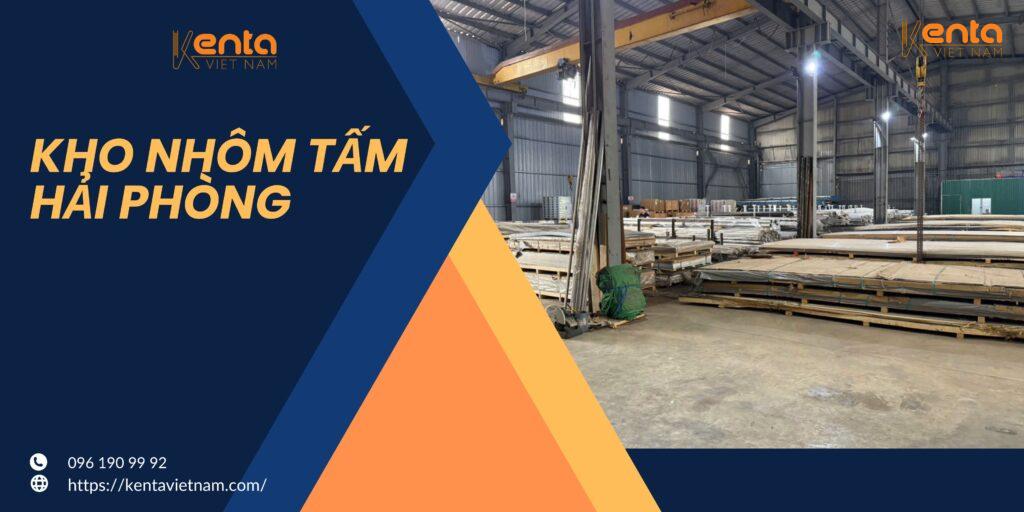
Non-Chinese origin aluminum is increasingly preferred by investors and contractors who demand transparent origins, strict inspection standards, and batch traceability. Choosing aluminum from reputable production sources helps reduce technical risks, facilitates registration and insurance procedures, and ensures long-term operational efficiency for projects.
Why Aluminum Origin Matters More Than Ever
In the material supply chain, origin determines many critical factors: actual chemical composition, level of control over the metallurgical process, and mechanical-physical stability between production batches. When aluminum is not of Chinese origin and is imported from European, Japanese factories, or domestically produced to standard, contractors can request clear Mill Test Certificates (MTCs), inspect microstructure, and test mechanical properties according to international standards. This is especially important in marine and heavy industrial projects, where even small deviations in composition or impurities can significantly affect weld life, fatigue properties, and structural safety.
Origin is also directly related to legal and commercial responsibility. Materials with transparent documentation help shorten acceptance procedures, simplify customs processes, and facilitate international trade. Therefore, many investors are now shifting towards using "non-Chinese origin aluminum" — meaning aluminum originating from the EU, Italy, South Korea, Japan, or domestic factories with full certification.
Technical Differences Between "Clearly Sourced" and Unidentified Origin Aluminum
In terms of material science, the biggest difference lies in purity and heavy metal impurities. Manufacturers adhering to strict standards will control impurity levels such as Fe, Cu, Zn to very low levels, resulting in better ductility, tensile strength, and stable weldability. Additionally, the process of controlling grain size and heat treatment time determines the fatigue behavior and stress corrosion cracking resistance of the alloy.
International standard production lines often have 100% inspection systems or batch sampling for spectral analysis, tensile testing, hardness measurement, and corrosion testing. Non-Chinese origin aluminum from large factories usually comes with detailed inspection records. In contrast, material batches of unknown origin sometimes only have minimal documentation or vague information, increasing risks when put into mass production.
Impact on Welds and Post-Weld Structure
Welds are the "weak point" of all metal structures. When using well-controlled origin aluminum, welds tend to achieve high continuity, fewer pores, and reduced hot cracking risk. This is because the alloy composition is optimized to be compatible with welding wire, arc current, and welding methods (TIG, MIG, robotic welding). With non-Chinese origin aluminum that has clear MTC records, engineers can select appropriate welding wire grades, adjust heat input, and welding procedures so that the heat-affected zone (HAZ) retains the required mechanical properties.
In marine applications, where continuous exposure to seawater and fluctuating loads occurs, ensuring defect-free welds is a critical factor for the structure's lifespan. Therefore, choosing aluminum with transparent origins helps reduce maintenance costs and increase operational safety.
Standards and Certificates Required When Purchasing Non-Chinese Origin Aluminum
When ordering non-Chinese origin aluminum, contractors need to request basic technical documents: Mill Test Certificate, chemical analysis report, tensile test results, and bending test results. For marine or export projects, classification certificates such as BV (Bureau Veritas), Lloyd's Register, or ABS (American Bureau of Shipping) are often mandatory. These certifications confirm that the material batch has undergone international standard inspection and is suitable for shipbuilding or offshore construction applications.
In addition to certificates, traceability systems using batch labels, QR codes, or digitized records help investors manage inventory and quickly cross-reference when needed. This transparency adds value for both suppliers and customers.
Kenta Vietnam: supplying aluminum without Chinese origin with international standard profiles
Kenta Vietnam is one of the distributors that focuses on material origin, specializing in supplying aluminum without Chinese origin, accompanied by complete inspection profiles. Kenta cooperates with reputable manufacturers and supplies aluminum sheets, aluminum coils, profiles, and marine alloys suitable for shipbuilding, structures, and industrial applications.
Each shipment distributed by Kenta can be accompanied by an MTC, mechanical and physical test reports, and, when requested by the customer, BV, Lloyd's, or ABS classification certificates. Kenta also provides consulting on alloy grade selection and surface treatment methods to optimize the lifespan of the project. Kenta's warehouse and logistics system is optimized to deliver goods throughout Southeast Asia at the lowest cost, helping customers maintain progress without incurring large storage costs.
Economic and management benefits when choosing aluminum with clear origin
Investing in aluminum with transparent origin may initially be more expensive than cheaper options with unclear origin. However, in the long run, the economic benefits are clear: reduced scrap rates, reduced post-welding repair costs, shortened acceptance times, and increased access to export markets. In terms of management, transparent records help businesses proactively control quality, easily fulfill insurance responsibilities, and ensure compliance with legal requirements.
Advice when ordering "aluminum without Chinese origin"
When you include the requirement "aluminum without Chinese origin" in your order, please specify the desired origin, mandatory technical standards, and accompanying documentation. Request the supplier to provide MTCs, test results, and, if necessary, international classification certificates. At the same time, clarify storage, packaging, and logistics conditions to ensure the material arrives at the construction site in the best condition.
For specific projects such as marine vessels, drilling rigs, or dynamic load-bearing structures, coordinate early with suppliers like Kenta to optimize alloy codes, welding wires, and construction processes.
Choosing aluminum without Chinese origin is not merely a commercial requirement but a strategic technical decision. Transparent origin helps reduce risks, optimize long-term operating costs, and facilitate inspection, insurance, and export procedures. Kenta Vietnam is committed to providing material solutions with complete technical documentation, BV, Lloyd's, ABS certificates as required, and delivery services throughout Southeast Asia at optimal cost, ready to accompany your project to ensure quality and progress.
————
KENTA VIETNAM – QUALITY BUILDS TRUST
 Main office: No. 22, Phung Cong service area, Phung Cong Commune, Hung Yen province
 Warehouse No. 1: Ngo Yen Hamlet, Hong An Ward, Hai Phong City (at the foot of Kien Bridge)
Warehouse No. 2: No. 22, Phung Cong service area, Phung Cong Commune, Hung Yen province
 Phone: 0972 887 106 – 0961 909 992
 Email: contact@kentavietnam.com
 Website: kentavietnam.com