Knowledge, Technology
Aluminum welding wire for robotic welding – Kenta Vietnam Top 1 supplier
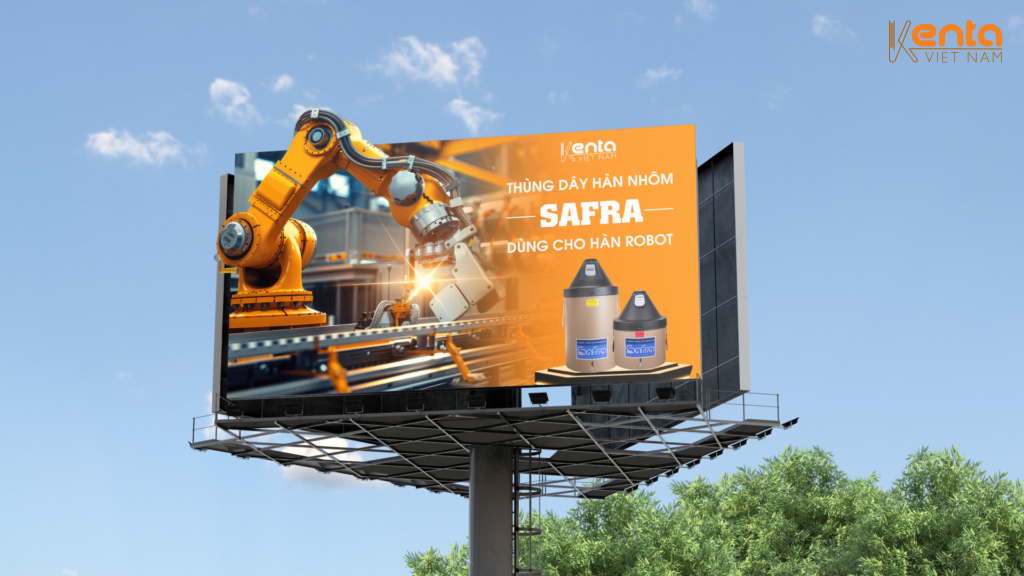
Aluminum welding wire for robotic welding is becoming a central factor in the automation trend of the mechanical engineering and shipbuilding industries. As welding robots replace manual operations to create highly stable welds, the accompanying consumables require more stringent technical characteristics, especially with aluminum – a metal that conducts heat strongly and is sensitive to arc variations.
Overview of aluminum welding wire for robotic welding
In an automated production environment, aluminum welding wire for robotic welding plays a decisive role in the quality of the weld and the operational efficiency of the entire production line. Thanks to its uniform melting ability and optimal heat transfer, high-quality aluminum welding wire helps robots maintain precise welding trajectories in all working conditions. This is why Kenta Vietnam focuses on supplying welding wires that meet international standards to meet the increasing demands of customers in the ASEAN region.
Scientific characteristics of aluminum welding wire when used in welding robots
The physical properties of aluminum make automatic welding a technical challenge. Aluminum has a low melting point, conducts heat quickly, and is easily oxidized upon contact with air. Therefore, aluminum welding wire must have high cleanliness, and the surface layer must be precisely treated to limit friction in the robot's conduit. The smoother the wire surface, the more stable the wire feeding speed and the less arc fluctuation.
When the robot operates, the welding wire must maintain stable arc generation even at high wire feeding speeds. The uniformity in the alloy composition helps prevent porosity and reduces the risk of hot cracking – two common defects in aluminum welding. Popular welding wire types such as ER5356, ER5183, ER4043 are manufactured based on specific alloying ratios to support tensile strength, reduce deformation, and increase corrosion resistance in environments with salt, heat, and chemicals.
In a robotic welding system, any small interruption in the wire feeding process can cause the arc to break and damage the operation cycle. If the welding wire is not up to standard, the robot may experience wire jerking, wire twisting, or incorrect feeding speed, leading to deviations in weld shape. Therefore, automated factories always prioritize aluminum welding wire with extremely low diameter tolerance, stable mechanical properties, and high surface purity.
Applications of aluminum welding wire in modern industries
Robotic welding with aluminum wire is widely used in shipbuilding, manufacturing of aluminum plate structures, high-speed boat hulls, patrol boat bodies, aluminum canoes, and shaped aluminum mechanical products. In shipyards, welding robots help increase productivity and create long, precise, and less deviated welds – something that manual welding struggles to achieve on large aluminum plates.
In light industrial manufacturing, robotic welding with aluminum wire is also used to produce components requiring high repeatability such as aluminum ladders, brackets, structural modules, and mechanical accessories. The use of robots helps save welding wire consumption because a stable arc reduces molten metal loss compared to manual welding.
When the welding wire meets standards, the robot can operate continuously for a long time without manual adjustment. This helps businesses maintain stable output, reduce downtime, and improve the accuracy of the entire production line.
Standards for aluminum welding wire and requirements for robotic welding projects
Most automated welding projects require internationally certified welding wire to ensure load-bearing capacity and weld durability over time. Standards such as BV (Bureau Veritas), Lloyd’s Register và ABS (American Bureau of Shipping) are important marine certifications that aluminum materials must meet when participating in shipbuilding and load-bearing structures.
Internationally standardized aluminum welding wire must pass many rigorous tests, including metallographic analysis, tensile testing, elongation, post-crystallization weld strength, and corrosion resistance. Only after passing the entire inspection process can the product be certified for use in large-scale projects.
Kenta Vietnam – Supplier of international standard aluminum welding wire for welding robots
Kenta Vietnam is a unit specializing in supplying aluminum welding wire for robotic welding playsserving heavy industries and automation industries throughout the region. All products distributed by Kenta have full BV, Lloyd, ABScertificates, ensuring legal and technical compliance for all shipbuilding and aluminum structure projects
Thanks to a stable supply and a strict quality control system, Kenta's welding wire helps robots operate smoothly, reduces wire feeding errors, and lowers equipment maintenance costs. For each order, Kenta always provides consulting on the appropriate wire grade for each type of robot and welding environment, helping customers optimize production efficiency.
Fast delivery capability across Southeast Asia at the lowest cost
Kenta Vietnam owns an extensive logistics system, allowing fast delivery to all countries in the ASEAN region. Optimizing transportation routes and transit warehouses helps keep costs low while delivery speed still meets the requirements of urgent projects, which are very common in the shipbuilding and automation industries.
Customers in Vietnam, Thailand, Malaysia, Indonesia, Singapore, or the Philippines can receive goods in a short time. Whether the volume is large or small, Kenta always maintains its commitment to minimize factory waiting times.
A complete solution for all aluminum robotic welding lines
As robotic welding becomes an inevitable trend, high-quality aluminum welding wire is the key to helping businesses maintain the stability and accuracy of their production lines. With internationally certified quality, fast delivery capabilities, and in-depth technical consulting services, Kenta Vietnam is becoming a trusted partner for many businesses in the region.
Any project requiring durable welds and continuous automated operation can find a suitable solution at Kenta.
————
KENTA VIETNAM – QUALITY BUILDS TRUST
 Main office: No. 22, Phung Cong service area, Phung Cong Commune, Hung Yen province
 Warehouse No. 1: Ngo Yen Hamlet, Hong An Ward, Hai Phong City (at the foot of Kien Bridge)
Warehouse No. 2: No. 22, Phung Cong service area, Phung Cong Commune, Hung Yen province
 Phone: 0972 887 106 – 0961 909 992
 Email: contact@kentavietnam.com
 Website: kentavietnam.com