Knowledge, Technology
Aluminum welding wire for marine applications: Selection criteria and practical applications
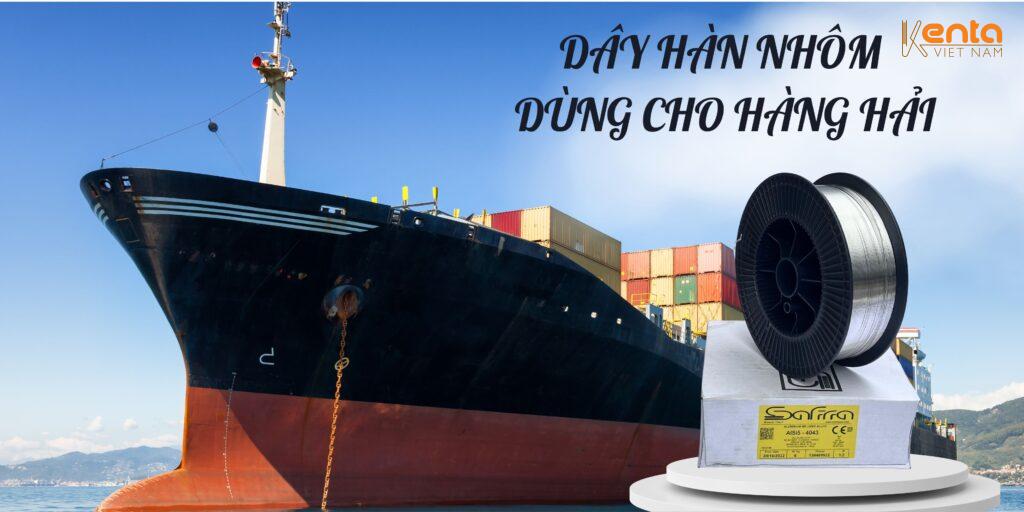
Aluminum welding wire for marine applications is a decisive factor in the quality of joints on hulls, decks, and components exposed to the marine environment. Choosing the right welding wire helps reduce repairs, extend the lifespan of the structure, and ensure safe operation for ships in all conditions.
What is aluminum welding wire for marine applications and why is it different?
Aluminum welding wire for marine applications is not just a consumable metal coil; it is an engineered product with strict control over alloy composition, diameter uniformity, and surface treatment to ensure stable arc. In the marine environment, these requirements become even more critical because salt, humidity, and continuous mechanical vibrations can degrade welds if the material is incompatible. Therefore, specialized marine welding wire must be chemically compatible with the aluminum base, create a uniform weld structure, and minimize defects such as porosity or shrinkage cracks.
Technical criteria to consider when choosing welding wire
When selecting welding wire for marine applications, criteria such as Mg and Si content, purity, wire diameter, and tensile strength after welding are indispensable factors. Wire with appropriate composition will create a stable heat-affected zone (HAZ), maintain the mechanical properties of the weld, and reduce the risk of localized corrosion. Arc stability helps the welding process, especially automatic and robotic welding, run smoothly, reduce spatter, and increase construction productivity.
Practical applications and benefits of using specialized welding wire
On ships, aluminum welding wire for marine applications is used for superstructures, decks, bulkheads, and interior components exposed to the saline environment. Using appropriate welding wire helps reduce ship weight, save fuel, and lower operating costs. Welds that meet technical requirements also help reduce overhaul frequency, limit risks arising during operation, thereby enhancing the economic efficiency for ship owners.
Inspection procedures and required standards
Each batch of welding wire brought to the construction site must be accompanied by complete technical documentation, including a Mill Test Certificate (MTC) and welding parameter guidelines. For the marine industry, certification from international classification societies is important evidence of material quality and reliability. Mechanical tests, salt spray corrosion tests, and sample weld inspections before mass production will help ensure process repeatability and reduce technical risks.
Kenta Vietnam's role in the marine welding wire supply chain
Kenta Vietnam provides aluminum welding wire for marine applications with complete technical documentation and consulting support for welding parameters. But Kenta is committed to transparent origin of goods and provides full international standard certificates such as Bureau Veritas (BV), Lloyd’s Register (LR), and American Bureau of Shipping (ABS). Kenta's partnership extends beyond material delivery to include consulting on selecting the right wire type for each aluminum grade, sample testing, practical technical guidance, and acceptance support when needed.
Storage and handling before welding
Proper storage of welding wire is an essential step to maintain quality. The wire must be stored in a dry environment, away from salt vapor and oxidizing chemicals. Before welding, the wire needs to be visually inspected, compared with the MTC, and if signs of oxidation or moisture are found, the surface must be treated or another batch used to avoid porosity in the weld. Proper handling by workers and parameters according to manufacturer's instructions help achieve stable weld quality.
Investing in materials to ensure sustainable operation
Choose aluminum welding wire for marine applications is a critical technical decision with long-term impacts on maintenance costs and structural lifespan. By partnering with reputable suppliers like Kenta VietNam — who provide materials with clear documentation and BV, Lloyd, ABS certifications — investors and contractors will minimize technical risks, optimize lifecycle costs, and ensure safe operation for ships.
————
KENTA VIETNAM – QUALITY BUILDS TRUST
 Main office: No. 22, Phung Cong service area, Phung Cong Commune, Hung Yen province
 Warehouse No. 1: Ngo Yen Hamlet, Hong An Ward, Hai Phong City (at the foot of Kien Bridge)
Warehouse No. 2: No. 22, Phung Cong service area, Phung Cong Commune, Hung Yen province
 Phone: 0972 887 106 – 0961 909 992
 Email: contact@kentavietnam.com
 Website: kentavietnam.com