Knowledge, Technology
Marine aluminum applications in shipbuilding – The material foundation for the modern marine industry
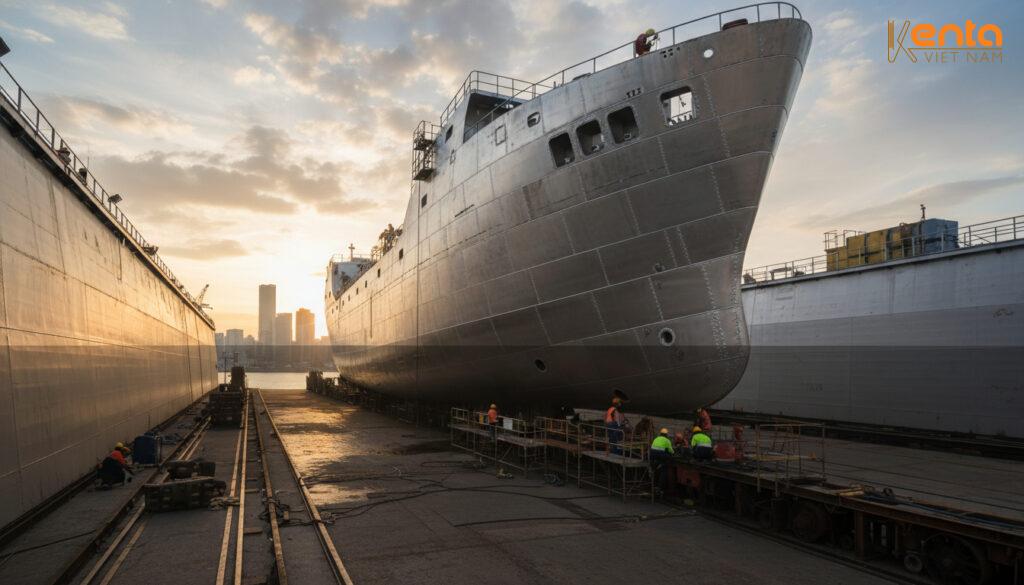
The development of the modern shipbuilding industry requires materials that are not only durable but also optimize operational efficiency and long-term costs. The application of marine aluminum in shipbuilding is therefore increasingly expanding, becoming a strategic choice for many marine vessel and watercraft projects across the entire Southeast Asian region.
Material mindset in modern marine vessel design
In the past, steel was the dominant material in shipbuilding due to its high strength and large load-bearing capacity. However, with increasingly stringent requirements for fuel efficiency, speed, and flexibility, the shipbuilding industry has begun to shift towards higher-performance materials.
Marine aluminum emerges as a suitable solution to this problem. The application of marine aluminum in shipbuilding is not just a change in material, but a change in design mindset, aiming for overall optimization rather than just focusing on mere durability.
Marine aluminum applications in shipbuilding from an engineering perspective
Reduced weight, increased operational efficiency. One of the clear advantages of applying marine aluminum in shipbuilding is its ability to reduce structural weight. Lighter vessel weight helps reduce drag, thereby improving speed and reducing fuel consumption during operation.
For high-speed vessels, service vessels, or patrol vessels, this factor brings clear operational efficiency, especially under continuous operating conditions.
Durable performance in marine environments. Marine aluminum is designed to operate stably in saltwater environments, where corrosion reactions are strong. The natural oxide layer formed on the aluminum surface acts as a protective layer, helping the material maintain long-term stability.
As a result, structures using marine aluminum are less affected by corrosion, reducing maintenance needs and extending the vessel's lifespan.
Scope of marine aluminum applications in shipbuilding categories
In practice, marine aluminum is flexibly applied to many different parts of a vessel. From the hull and deck to the superstructure and auxiliary structures, this material allows designers to optimize weight while still meeting technical requirements.
The use of marine aluminum for these categories not only improves operational efficiency but also helps reduce the load on the overall structure, which is especially important for vessels operating for extended periods at sea.
International standards – a mandatory factor when applying marine aluminum in shipbuilding
The role of international classification societies. In the shipbuilding industry, all materials used must comply with strict classification standards. Marine aluminum is only accepted if it meets technical requirements for alloy composition, mechanical properties, and corrosion resistance.
International standards not only ensure technical safety but also provide the legal basis for vessels to operate on international shipping routes.
Kenta and the BV, Lloyd, ABS certification system. Kenta supplies marine aluminum with full documentation and certificates according to BV, Lloyd, and ABS standards. This helps shipbuilding projects shorten material appraisal time and facilitates the acceptance process.
Ensuring certification from the outset also helps investors effectively control technical and legal risks throughout the project lifecycle.
Economic value of applying marine aluminum in shipbuilding
The application of marine aluminum in shipbuilding not only brings technical benefits but also creates long-term economic value. Weight reduction helps save fuel, while good corrosion resistance helps reduce maintenance and repair costs.
In the context of rising fuel prices and operating costs, choosing the right material from the design phase becomes a decisive factor in investment efficiency.
Kenta – partner supplying marine aluminum for regional shipbuilding projects
Stable and flexible supply capacity. Kenta not only focuses on material quality but also emphasizes its ability to meet project deadlines for shipbuilding projects. The marine aluminum supplied by Kenta is distributed stably,suitable for projects of various scales and technical requirements.
Proactive sourcing helps shipyards minimize production disruptions and optimize construction plans.
Delivery across Southeast Asia with optimized costs. With an optimized logistics network, Kenta delivers marine aluminum throughout the Southeast Asian region. This is especially important for shipbuilding projects with international elements or those implemented in multiple countries.
Good supply chain control allows Kenta to provide delivery solutions at the lowest cost, helping businesses optimize their budgets while ensuring material quality meets standards.
Application of marine aluminum in shipbuilding – an inevitable trend in the maritime industry
As the maritime industry moves towards high efficiency and sustainable development, the application of marine aluminum in shipbuilding is becoming an inevitable trend. Lightweight, durable, and internationally certified materials help shipbuilding projects meet technical, economic, and environmental requirements.
With marine aluminum certified by BV, Lloyd, ABS, and the ability to deliver across Southeast Asia at optimized costs, Kenta is gradually asserting its role as a reliable material partner for modern shipbuilding projects in the region.
————
KENTA VIETNAM – QUALITY BUILDS TRUST
 Main office: No. 22, Phung Cong service area, Phung Cong Commune, Hung Yen province
 Warehouse No. 1: Ngo Yen Hamlet, Hong An Ward, Hai Phong City (at the foot of Kien Bridge)
Warehouse No. 2: No. 22, Phung Cong service area, Phung Cong Commune, Hung Yen province
 Phone: 0972 887 106 – 0961 909 992
 Email: contact@kentavietnam.com
 Website: kentavietnam.com